Skip to content
How Fleet Managers Can Reduce Missed Services

Introduction
A missed service on one fleet vehicle can mean a breakdown, a failed safety inspection, or a voided warranty. Multiply that across 10, 20, or 50 vehicles and the cost adds up fast.
Fleet managers are responsible for keeping every vehicle roadworthy, compliant, and operational — often without a dedicated maintenance team. Here's how to build a simple system that keeps every vehicle on schedule without expensive software.
Why Fleet Services Get Missed
The most common reasons fleet services are missed:
- No visible reminder in the vehicle — drivers don't know when the next service is due
- Relying on drivers to self-report — most won't unless prompted
- Inconsistent record keeping — service history spread across receipts, emails, and memory
- High driver turnover — new drivers inherit vehicles with no service history visible
- No centralised tracking — fleet manager loses visibility across multiple vehicles
The Foundation: A Sticker On Every Vehicle
The single most effective change a fleet manager can make is ensuring every vehicle has a service due sticker on the windscreen after every service.
This does three things:
- Gives the driver a visible, daily reminder of when the next service is due
- Allows the fleet manager to do a quick visual audit of any vehicle at any time
- Creates a consistent handover point when vehicles change drivers
For fleets, the Red Label High Visibility Service Due Sticker is popular because it's impossible to miss. For branded fleets, the Custom Large Format Service Reminder Sticker carries your company name and contact details on every vehicle.
Build A Simple Fleet Service Register
A shared spreadsheet with the following columns is all most SME fleets need:
- Vehicle rego
- Make and model
- Last service date
- Last service odometer
- Next service due (date)
- Next service due (km)
- Assigned driver
Review this register monthly. Flag any vehicle within 4 weeks or 1,000km of its next service and book it in proactively.
Set A Monthly Visual Audit
Once a month, walk the fleet and check the service sticker on every windscreen. This takes 10 minutes for most fleets and immediately identifies:
- Vehicles overdue for service
- Vehicles with missing or illegible stickers
- Vehicles that have changed drivers without a sticker update
This simple habit catches problems before they become breakdowns or compliance failures.
Standardise The Service Interval
Where possible, standardise all fleet vehicles to the same service interval — typically every 6 months or 10,000km, whichever comes first. This simplifies scheduling, reduces the cognitive load on the fleet manager, and makes bulk sticker ordering straightforward.
Our custom branded service stickers are available in bulk packs, making it easy to keep a consistent supply across the entire fleet.
Use Double-Sided Stickers For High-Visibility Fleets
For fleets where vehicles are frequently inspected or audited — transport, mining, construction — a double-sided service sticker is readable from both inside and outside the vehicle. The Custom Double-Sided Service Due Sticker is designed for exactly this application.
What About Telematics?
Telematics systems can track odometer readings and trigger service alerts automatically. For large fleets (50+ vehicles), this investment makes sense. For most Australian SME fleets, the combination of a service sticker, a simple spreadsheet, and a monthly visual audit delivers 90% of the benefit at 1% of the cost.
Conclusion
Reducing missed fleet services doesn't require expensive software. It requires a visible reminder in every vehicle, a simple central register, and a monthly review habit.
Start with a service due sticker on every vehicle — it's the lowest-cost, highest-impact change a fleet manager can make today. Browse our full range of custom branded fleet service stickers for bulk ordering.
Related Products
-
 "Try Me" Stickers – White Text on Red | Retail Product Decals | Australian Made
 -
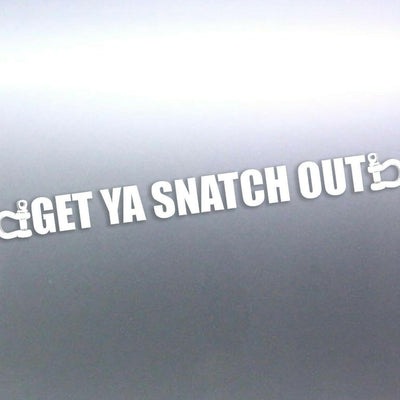 1 Meter long Get ya Snatch out Sticker vinyl cut 4x4 Decal long rude funny your
 -
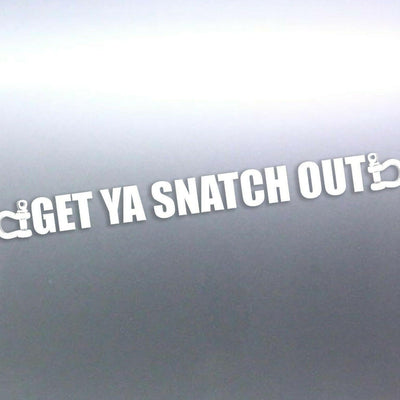 1.5 Meter long Get ya Snatch out Sticker vinyl cut 4x4 Decal long rude funny you
 -
 1.5 meters sticker vinyl cut Decal Aussie corona social distance distancing Bugs